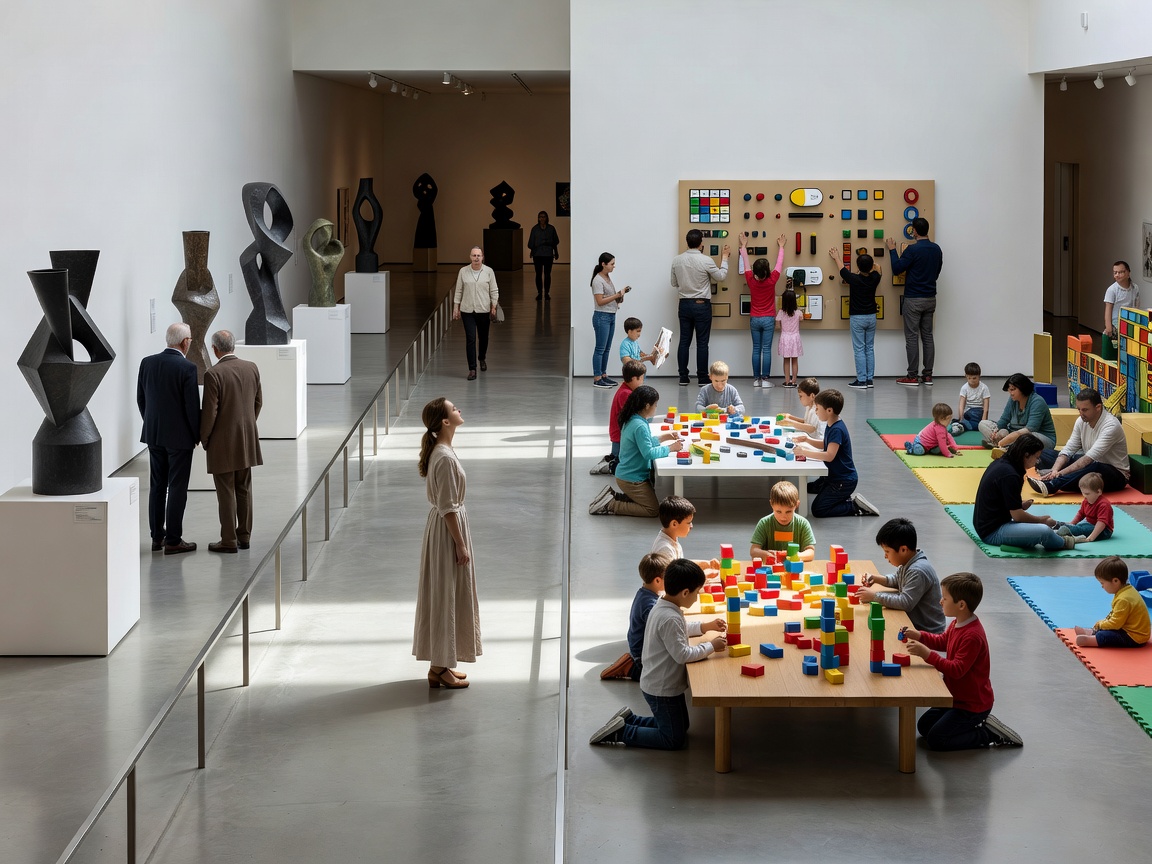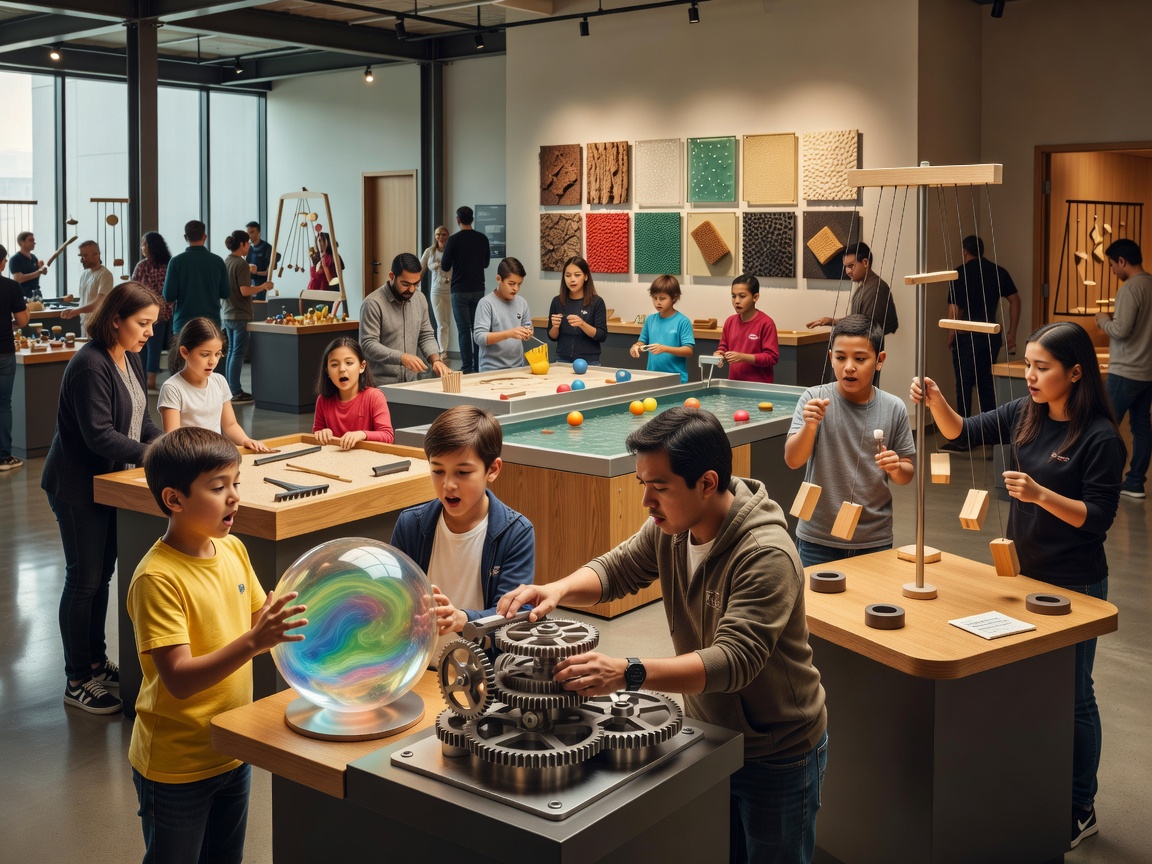
A hands-on exhibit gives visitors a way to participate. A visitor might turn a wheel, build a structure, sort materials, perform a role or notice what changes after an action. The exhibit itself sets the invitation. The museum's instructions, layout and supervision expectations shape how it is used.
Open-ended and structured activities
Open-ended exhibits offer materials or prompts without one fixed result. Blocks, loose parts, drawing tools and some pretend-play settings can support many approaches. Visitors choose what to make or how to begin. This flexibility can suit groups with different interests, but it may be less clear what to do at first. A short prompt or visible example can help without prescribing one outcome.
Structured activities provide a clearer task. A visitor may follow steps, compare options or operate a control to see a response. This can make the activity easier to enter and easier to repeat. It can also limit the number of possible approaches. Neither format is universally better. Some museums combine a clear starting point with room to explore.
Common interactive formats
Cause and effect
These exhibits make a change visible after an action. A lever may move an object; a dial may alter a light or sound; a track may redirect a ball. The useful design question is whether visitors can see what changed and try again. Controls and moving parts should be used as directed. Follow posted age guidance and ask staff when an activity's operation is unclear.
Building and construction
Blocks, connectors and large-scale building materials invite visitors to plan, assemble and revise. They can work as solo or group activities. Check whether the area uses small components, requires standing or has limited space around completed structures. Materials may need to be returned to a designated station.
Role-play
Marketplaces, workshops and other pretend environments let visitors take on familiar or invented roles. These areas often involve shared props and social negotiation. They can attract several groups at once, so consider waiting, turn-taking and how easily a child can leave and rejoin.
Sensory exploration
Texture, sound, movement, light and water can be part of an exhibit. Sensory conditions differ between venues and between stations. Look for descriptions of sound levels, lighting, materials, water use and quiet spaces. A venue's published information is the best source for its current conditions.
Science demonstrations and creative activities
Some museums present scheduled demonstrations; others offer self-guided experiments or making tables. A demonstration has a set duration and may involve a group. A drop-in activity offers more control over timing but may have limited materials. Check the venue's current programme rather than relying on general descriptions.
Age suitability and supervision
Age guidance is a starting point, not a guarantee that every visitor will prefer an activity. Consider reach, reading demands, small components, physical effort, instructions and the amount of adult participation expected. The museum may publish recommended ages or safety notes. Ask staff about a specific station if its suitability is uncertain.
Caregivers remain responsible for supervision unless the venue states otherwise. Follow signs, keep walkways clear and return shared equipment as requested. Some exhibits require close adult attention. Others are designed for independent exploration within a supervised museum visit.
Benefits and limitations by format
- Open-ended making: offers choice and repeat use; may need a clear invitation to get started.
- Cause-and-effect controls: make changes easy to observe; can become busy around a limited number of controls.
- Role-play: supports shared scenarios; may involve waiting, noise or competition for props.
- Demonstrations: provide a shared focal point; follow a schedule and may not suit every visitor's pace.
- Sensory stations: offer direct material exploration; conditions and personal preferences vary.
These are practical trade-offs, not rankings. Exhibit quality depends on the details, maintenance and fit with the visitor.
Good for
Families looking for active participation, visitors who prefer to learn by manipulating objects, and groups who want to compare different exhibit formats. Use the museum's age and safety notes to choose a useful starting area.
What to know
- Check age guidance and any handling instructions.
- Review current programmes for scheduled demonstrations.
- Ask about small parts, water, sound or other specific exhibit conditions.
- Expect shared equipment and allow time for turns and transitions.